---
title: "Engineering - Environmental Engineering M.E."
url: "/academics/programs/environmental-engineering-me"
type: program
date: 2026-06-08
updated: 2026-06-08
---
# Engineering - Environmental Engineering M.E.
# Engineering - Environmental Engineering M.E.
**Protect the planet and public health through sound engineering practice.**
The Master of Engineering (M.E.) in Environmental Engineering builds the practical skills you need to maintain and improve environmental quality and public health, blending current applications with the theoretical foundation behind sound engineering practice. This STEM-designated program prepares you to provide safe drinking water, clean air, and healthy waterways near the heart of New York City.
[ Request Information ](/graduate/admissions/request-information)
[ Visit Manhattan University ](/admissions/visit) [ Explore School of Engineering ](/academics/engineering)
Credit Hours30
Time to Complete18-24 Months
Image

This program is part of [Civil & Environmental Engineering](/academics/engineering/departments/civil-environmental)
What Set's Us Apart The Manhattan University Difference
## What Sets Us Apart
The Environmental Engineering M.E. at Manhattan University prepares you to safeguard water, air, and public health through engineering grounded in both current practice and theory. You will work side by side with faculty on funded research, gain real experience through a paid graduate internship program, and build the technical skills that environmental engineering employers across New York City demand.
Funded Faculty Research
Work directly with faculty on research backed by agencies like the NYCDEP, the Water Research Foundation, and NYSERDA.
Paid Graduate Internships
Spend three days a week at a top NYC engineering firm and two in class, with tuition support built in.
Study on Your Schedule
Earn your degree through a blended online and in-person format, or entirely in person, to fit your life.
Small, Focused Classes
Learn in classes of fewer than 15 students, where close interaction with peers and professors drives your growth.
Hands-On Technical Skills
Develop expertise in data analysis, treatment process design, water quality modeling, and technical writing.
NYC Industry Access
Connect with employers like AECOM, Con Edison, Hazen & Sawyer, CDM Smith, and the EPA where graduates now work.
30
Minimum Credit Hours
Flexible
Online and hybrid education that includes in-person and online coursework
$104K+
2024 Median Salary\*
\*U.S. Bureau of Labor Statistics
Why Study Environmental Engineering
Image

The Manhattan Advantage
## Why Study Environmental Engineering at Manhattan University?
At Manhattan University, you will work to provide the public with safe and reliable drinking water, clean air, and healthy waterways. You may also ensure the proper disposal of solid and hazardous waste and manage effective environmental site restoration. Our M.E. program emphasizes current applications alongside the theoretical foundation behind sound engineering practice, preparing you to meet the societal need for maintaining and improving environmental quality and public health. Through funded research, a paid graduate internship program, and close faculty mentorship, you graduate ready to lead in the field.
Image

Curriculum & Courses This block only displays content on program pages.
Image

## Why Study in New York City
New York City is one of the most demanding environments in the world for environmental engineering, with aging water infrastructure, ambitious clean-water and clean-air mandates, and a dense network of public agencies and private firms working to protect public health. Studying here puts you within steps of the organizations that define the field, from the New York City Department of Environmental Protection to leading consulting firms such as AECOM, Hazen & Sawyer, and CDM Smith. Through the graduate internship program, funded faculty research, and direct industry access, you apply classroom theory to the real water, air, and remediation challenges shaping one of the nation's most complex environmental markets, building the technical confidence and professional network needed to lead.
Image

## Environmental Engineering: Protect Water, Air, and Public Health
At Manhattan University, environmental engineering students gain the advanced technical skills, hands-on research experience, and professional mentorship needed to safeguard the systems people depend on every day. Our program pairs rigorous coursework with real-world application, preparing you to lead with insight, confidence, and impact.
Water Quality Modeling
Model the transport and fate of contaminants across rivers, lakes, and reservoirs to meet water quality objectives.
Treatment Process Design
Design the treatment systems that clean drinking water and wastewater for communities and industry.
Environmental Chemistry
Apply the chemistry of natural waters and the atmosphere to solve real environmental engineering problems.
Biological Treatment
Apply biological processes to treat municipal, industrial, and hazardous water and waste streams.
Data Analysis & Interpretation
Measure water quality parameters and analyze experimental data using modern laboratory techniques.
Technical Communication
Prepare, review, and present the technical reports that drive environmental decisions and compliance.
## **Learn From Faculty Committed to Your Success**
The Civil & Environmental Engineering department faculty are committed to serving you and the greater good through science. You will work side by side in small classes with fewer than 15 students, allowing for thoughtful interaction with peers and professors alike. Faculty mentor students through funded research, industry connections, and the professional development that prepares you to lead in the field.
[Meet our Faculty](/academics/engineering/departments/civil-environmental/faculty "Faculty | Department of Civil and Environmental Engineering")
This block only displays content on program pages.
Image
About
## The School of Engineering
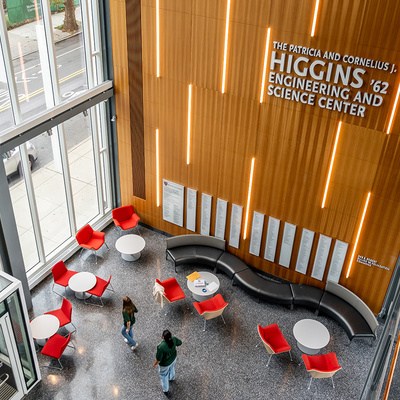
Known as "The University That Built New York," Manhattan University's School of Engineering has shaped the systems, structures, and innovations of New York City for more than a century. Our ABET-accredited programs are recognized for rigorous academics, hands-on laboratory experience, and a Lasallian commitment to using engineering for the good of humanity. Manhattan University is a Top 50-ranked engineering school with 19 alumni elected to the National Academy of Engineering. Located in New York City, the School offers students unmatched access to industry partners, internships, and real-world projects across water, environmental, and infrastructure systems. With small class sizes, dedicated faculty mentorship, and a strong tradition of service, our graduates are exceptionally well-prepared to lead in today's engineering profession.
[ Explore School of Engineering ](/academics/engineering)
Image

Program Costs & Aid ## Program Costs & Financial Aid
Manhattan University is committed to making a high-quality, career-focused graduate education accessible and affordable. Graduate students may qualify for assistantships, scholarships, and federal aid that significantly reduce the overall cost of attendance.
- [**View Tuition & Fees**](/graduate/tuition-fees "Tuition & Fees | Graduate")
- [**View Graduate Assistantships**](/admissions/financial-aid/student-employment/graduate-lab-assistantships "Graduate and Lab Assistantships | Financial Aid")
- [**Explore Scholarships Scholarships**](/admissions/financial-aid/loans-grants/scholarships-and-grants "Aid, Scholarships and Grants")
- [**View Graduate Federal Aid and Grants**](/graduate/financial-aid "Grants and Loans | Graduate")
A Manhattan University education is an investment in your future, and we are dedicated to helping you access the resources that make it possible.
[Learn More About Graduate Costs and Financial Aid](/graduate "Graduate Education")
Admission Information ## Admissions Information
**Start Your Journey in Environmental Engineering**
Applying to Manhattan University is designed to be clear and accessible. Review the requirements below to take the next step toward an advanced environmental engineering career.
**Requirements:**
- Bachelor's degree in engineering from a program accredited by the Engineering Accreditation Commission of ABET (or recognized equivalent)
- Minimum 3.0 GPA on a 4.0 scale
- Undergraduate degree normally in the same discipline; applicants from other engineering disciplines may be required to complete prerequisite coursework
- Official transcripts from all institutions attended
[Learn More about International Graduate Admissions](/node/83)
Image

## Prepare for the Real World
At Manhattan University, your education is built around who you are and where you want to go. Whether you’re ready to apply or just starting to explore, take the next step when you’re ready — we’re here to help.
[Apply Today](/admissions/apply)
[Visit Manhattan University](/admissions/visit)
[Request Information](/admissions/undergraduate/request-information)
Image

Manhattan University's M.E. in Environmental Engineering prepares you to protect water, air, and public health, with a paid NYC graduate internship program.